

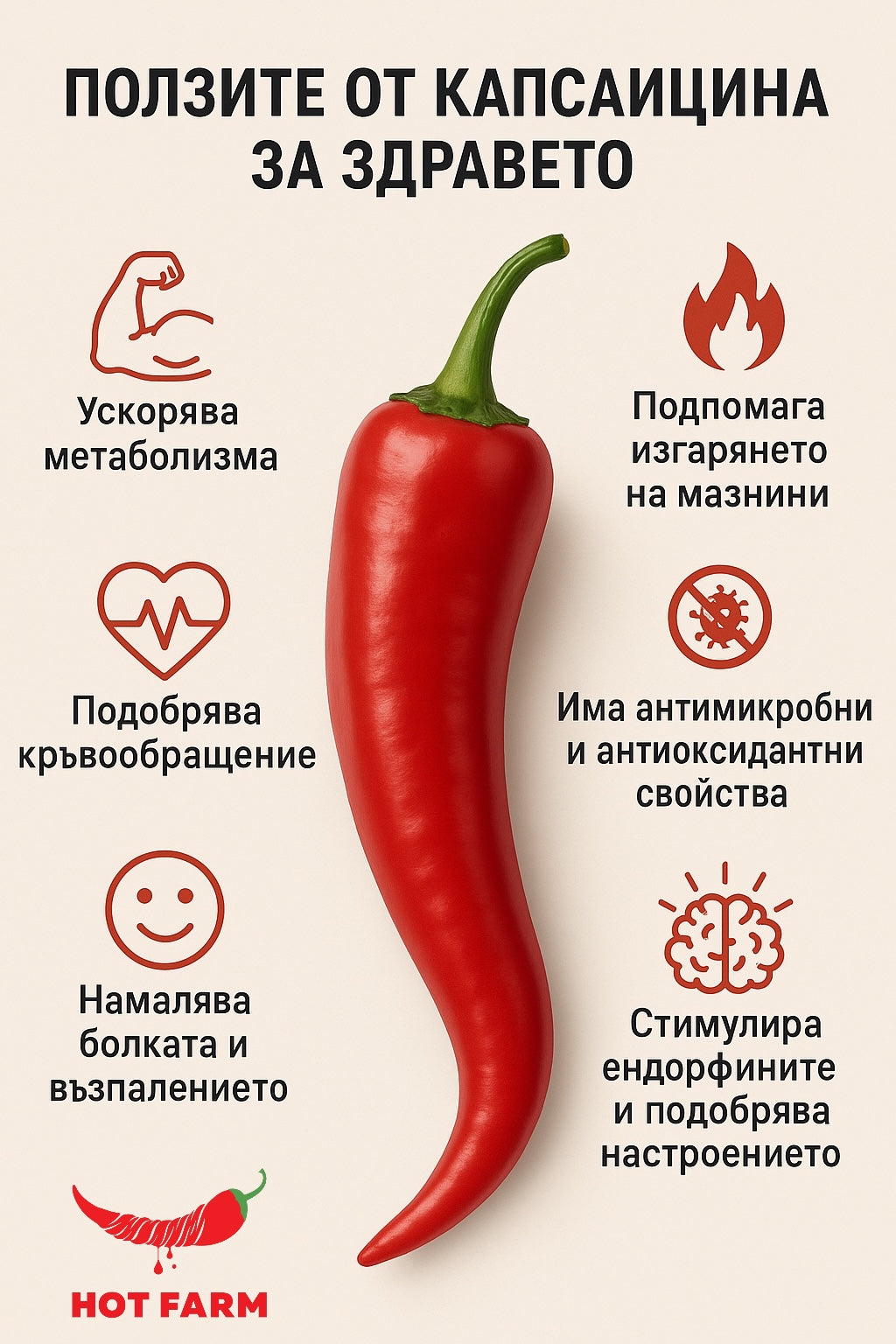
Capsaicin - the secret ingredient in chili peppers and its healing properties
In a world where natural medicines are gaining more and more attention, one small but powerful molecule stands out with its remarkable medicinal properties. It is capsaicin - the active substance that gives peppers their spicy taste and which scientists have been studying with increasing interest in recent decades. In this article, we will take a closer look at what capsaicin is, how it works on the human body and what its proven medicinal properties are.
What is capsaicin?
Capsaicin (chemical name: 8-methyl-N-vanillyl-6-nonenamide) is an alkaloid found in chili peppers of the genus Capsicum. It is a natural compound with a long hydrocarbon "tail" that is insoluble in water, tasteless, and odorless in its pure form. However, when it comes into contact with mucous membranes and skin, capsaicin causes the characteristic burning and heat sensation.
Capsaicin is found in the highest amounts in the placental tissue of chili peppers - the membranes inside them that hold the seeds, and to a lesser extent in the fleshy part of the peppers. Interestingly, the seeds themselves do not contain any capsaicin, although they are often considered the hottest part of the pepper.
The spiciness of different types of peppers is measured on the Scoville Heat Units (SHU) scale, which actually measures the concentration of capsaicin. For example, sweet peppers have 0 SHU, while some of the hottest peppers in the world, such as the Carolina Reaper, can reach over 2 million SHU.
How does capsaicin work on the body?
To understand the healing properties of capsaicin, we first need to understand how it interacts with our bodies. When we consume chili peppers or apply capsaicin to the skin, it binds to specific receptors called TRPV1 (Transient Receptor Potential Vanilloid 1).
These receptors are usually activated at high temperatures (above 43°C) and transmit signals to the brain that the body is experiencing heat or pain. Capsaicin activates these receptors, creating a burning sensation, even though it doesn't actually cause any physical damage to the tissues. This is why we feel a "fire" in our mouth when we eat chili peppers, even though the food may be normal temperature.
Interestingly, with prolonged exposure to capsaicin, TRPV1 receptors become desensitized—they temporarily lose their ability to transmit pain signals. This mechanism underlies many of capsaicin's medicinal uses, particularly for pain relief.
Proven healing properties of capsaicin
Scientific research over the past decades has revealed numerous medicinal properties of capsaicin. Here are the most significant of them, supported by clinical studies:
1. Pain relief
Capsaicin is recognized as an effective pain reliever for various types of pain. Its analgesic properties are due to its ability to desensitize nerve endings that transmit pain signals.
Clinical studies show that capsaicin is particularly effective in:
- Arthritis pain: It has been found that in most people, arthritis pain is significantly reduced or even disappears after just two weeks of taking capsaicin. It relieves pain in osteoarthritis, rheumatoid arthritis, and other joint diseases.
- Neuropathic pain: Capsaicin is approved for the treatment of neuropathic pain associated with postherpetic neuralgia (pain after shingles) and diabetic neuropathy. High-dose capsaicin patches (8%) have shown significant pain relief in these conditions.
- Migraines and headaches: Capsaicin numbs the trigeminal nerve, a nerve in the brain that is associated with migraines or severe headaches. Studies have shown that applying a capsaicin spray can provide temporary relief.
- Muscle pain: Capsaicin creams and ointments are effective in relieving muscle pain, including fibromyalgia and back pain.
2. Anti-inflammatory properties
Capsaicin has powerful anti-inflammatory properties that can help with a variety of inflammatory conditions. It inhibits the production of substance P, a neuropeptide that is involved in inflammatory processes and the transmission of pain signals.
Research shows that capsaicin can reduce inflammation in:
- Rheumatoid arthritis
- Psoriasis
- Inflammatory bowel diseases
- Allergic reactions
The anti-inflammatory properties of capsaicin make it a valuable component in many ointments recommended for arthritis and joint pain.
3. Anti-carcinogenic properties
One of the most promising properties of capsaicin is its potential role in fighting cancer. Numerous studies have shown that capsaicin may have anti-cancer effects through a variety of mechanisms:
- Induction of apoptosis (programmed cell death) in cancer cells
- Inhibition of tumor growth
- Suppression of metastasis
- Destruction of mitochondria in cancer cells, which provide energy to the cancer
A 2007 study by the American Institute for Cancer Research found that capsaicin has promising results in fighting cancer. A 2006 report by an NGO showed that capsaicin was able to kill up to 80% of prostate cancer cells in laboratory mice.
Another study showed that oral administration of capsaicin reduced pancreatic tumors in mice by up to 50% compared to mice that had a normal diet.
According to data from the World Health Organization, in countries where people more often consume foods containing capsaicin, mortality from cancer is significantly lower.
4. Cardiovascular benefits
Capsaicin has positive effects on the cardiovascular system, making it potentially useful for the prevention and treatment of cardiovascular diseases:
- Normalizing blood pressure: Capsaicin dilates blood vessels and stabilizes the heart's function, which helps reduce high blood pressure.
- Lowering cholesterol: Studies show that capsaicin can reduce LDL ("bad" cholesterol) levels and increase HDL ("good" cholesterol) levels.
- Preventing blood clots: Capsaicin has antithrombotic properties that may help prevent heart attacks and strokes.
- Improving blood circulation: Capsaicin accelerates blood circulation, prevents the development of atherosclerosis and strengthens the walls of blood vessels.
According to a study by the Chinese University of Hong Kong, the hot substances in peppers reduce the accumulation of cholesterol in the body and increase its breakdown and excretion. The experiment also showed that capsanoids block the action of a gene that activates the contraction of the arteries and, accordingly, restricts blood flow to the heart.
5. Metabolic effects and weight control
Capsaicin may play a role in weight control and metabolic health through several mechanisms:
- Accelerate metabolism: Capsaicin temporarily increases metabolism by activating the sympathetic nervous system and increasing thermogenesis (heat production).
- Appetite suppression: Some studies show that capsaicin can reduce appetite and increase feelings of fullness.
- Improve insulin sensitivity: Capsaicin may improve insulin sensitivity and help control blood sugar.
- Stimulates fat burning: Capsaicin activates certain receptors that stimulate fat burning, especially in brown adipose tissue.
Studies show that capsaicin can help prevent the risk of developing type 2 diabetes. In the course of research, Australian scientists found that if there is chili pepper in the food, then much less insulin is needed to lower blood sugar levels.
6. Antimicrobial and immunostimulating properties
Capsaicin has antimicrobial properties that can help fight various pathogens:
- Antibacterial effects: Capsaicin shows activity against various bacteria, including Helicobacter pylori, which causes stomach ulcers.
- Antifungal properties: There is evidence that capsaicin may act as an antifungal agent against pathogens such as Fusarium.
- Immunostimulating effects: Capsaicin can stimulate the immune system, increasing resistance to infections.
Chili peppers contain vitamin C in very high doses (in some varieties even twice as much as in lemon), vitamin A, vitamin E, and B vitamins. They protect the cells in the body and help it cope with inflammation.
7. Improve digestion
Despite the common belief that spicy foods can irritate the stomach, capsaicin may actually have positive effects on the digestive system:
- Stimulates the production of gastric juices: Capsaicin stimulates the production of gastric juices, which improves digestion.
- Protects the stomach lining: Studies show that capsaicin can stimulate the production of protective mucus in the stomach and reduce stomach acid production, which may help prevent and treat stomach ulcers.
- Antibacterial properties in the digestive tract: Capsaicin can help fight harmful bacteria in the gastrointestinal tract, making it effective for stomach and intestinal disorders.
- Supporting liver function: Capsaicin supports liver function and has a laxative effect, which helps prevent constipation.
8. Neuroprotective effects
New research suggests that capsaicin may have neuroprotective properties that could be beneficial in neurodegenerative diseases:
- Neuronal protection: Capsaicin can protect neurons from oxidative stress and inflammation.
- Improving cognitive function: Some research suggests that capsaicin may improve memory and cognitive function.
- Potential benefits in Alzheimer's and Parkinson's disease: Preliminary research suggests that capsaicin may have potential benefits in these neurodegenerative diseases.
Applications of capsaicin in medicine
Thanks to its numerous medicinal properties, capsaicin is widely used in modern medicine:
Pharmaceutical products
Capsaicin is an active ingredient in various pharmaceutical products:
- Pain-relieving creams and ointments: Capsaicin is used in concentrations between 0.025% and 0.1% in various creams and ointments to relieve muscle and joint pain.
- Patches: High-dose capsaicin patches (8%) are used to treat neuropathic pain.
- Nasal sprays: Capsaicin sprays are used to relieve symptoms of allergic rhinitis and sinusitis.
- Dietary supplements: Capsaicin is also available in the form of dietary supplements for various health purposes.
Here is the supplement we developed based on extensive research into the benefits of Capsaicin: Cayenne Pepper Tincture
Medical research
Capsaicin continues to be the subject of intensive medical research for potential new uses:
- Development of new analgesics: Scientists are using capsaicin as a model to develop new painkillers with fewer side effects.
- Anti-cancer therapies: Research on the anti-cancer properties of capsaicin may lead to the development of new anti-cancer therapies.
- Obesity treatment: Capsaicin is being investigated as a potential treatment for obesity through its effects on metabolism and appetite.
How to incorporate capsaicin into your daily routine?
If you want to benefit from the healing properties of capsaicin, here are a few ways to incorporate it into your daily routine:
Through food
The most natural way to consume capsaicin is through chili peppers and foods that contain them:
- Fresh chili peppers : Add fresh chili peppers to salads, soups, stews, and other dishes.
- Dried and ground chili peppers: Use paprika, chili powder, and other chili pepper spices.
- Hot pepper sauces: From mildly hot to extremely hot
Through dietary supplements
If you don't like spicy food or want a more concentrated dose of capsaicin, you can use dietary supplements:
- Tinctures: Liquid extracts of chili peppers that can be added to drinks or taken directly.
By topical application
To relieve pain and other local problems, capsaicin can be applied directly to the skin:
- Creams and ointments: Apply capsaicin creams to painful joints or muscles.
- Patches: Capsaicin patches can provide long-lasting pain relief.
! Precautions and side effects
Despite its numerous benefits, capsaicin should be used with caution:
Possible side effects
- Skin and mucous membrane irritation: Capsaicin can cause burning, redness, and irritation upon contact with the skin or mucous membranes.
- Gastrointestinal problems: In some people, especially at high doses, capsaicin can cause gastrointestinal problems such as heartburn, nausea, or diarrhea.
- Allergic reactions: Some people may develop allergic reactions to capsaicin.
Who should avoid capsaicin?
- People with gastritis, ulcers, or irritable bowel syndrome: These conditions may be worsened by consuming capsaicin.
- People with certain skin conditions: Capsaicin may worsen some skin conditions.
- Pregnant and breastfeeding women: Although there is no conclusive evidence of harm, moderation is recommended.
- People taking certain medications: Capsaicin may interact with some medications, including aspirin and blood thinners.
Conclusion
Capsaicin, the secret ingredient in chili peppers, is a remarkable compound with a host of proven medicinal properties. From pain relief and inflammation reduction to potential anti-cancer effects and cardiovascular benefits, capsaicin offers a wide range of health benefits.
Modern science continues to uncover new and exciting uses for this ancient healing substance, used for millennia in traditional medicine. Whether you consume chili peppers as part of your diet, use capsaicin creams for pain relief, or take capsaicin supplements, this powerful compound can be a valuable ally in maintaining your health.
As with all natural remedies, the key is moderation and consulting a medical professional, especially if you have existing health problems or are taking medications.
Sources:
1. American Institute for Cancer Research - Study on the Anticarcinogenic Properties of Capsaicin (2007)
2. Chinese University of Hong Kong - Study on the effect of capsaicin on cholesterol
3. World Health Organization - Cancer statistics in countries with high chili pepper consumption
4. Revita.bg - "Red chili peppers: an explosion of health and energy!"
5. Biovital.bg - "Cayenne pepper - what is it used for and health benefits?"
6. Wikipedia - "Capsaicin"