
A Guide to Growing Exotic Hot Peppers
This guide will become your best friend when growing exotic hot peppers at home, in the garden or in a greenhouse. It will also answer questions such as:
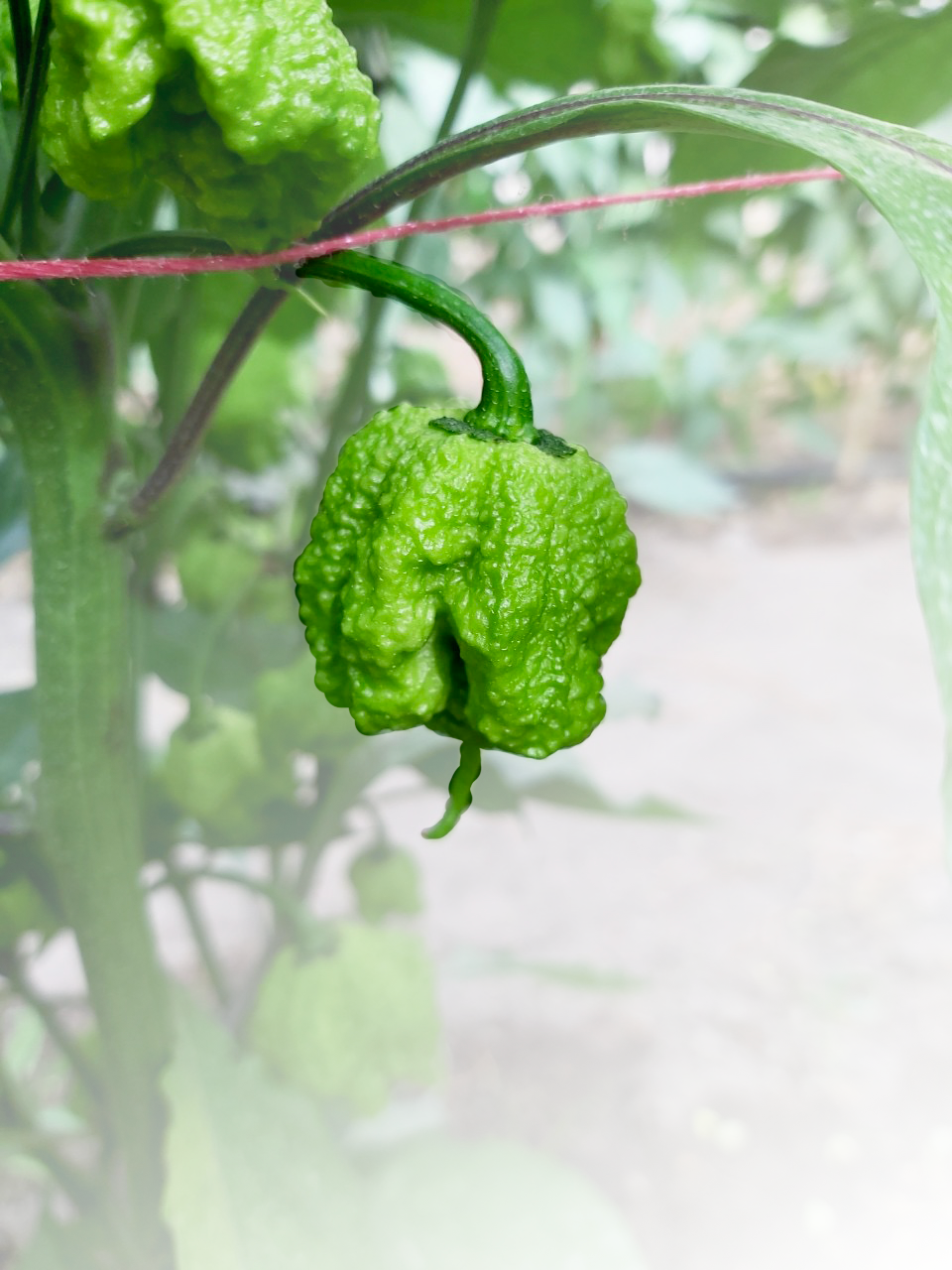
But first, let's talk about exotic hot peppers. Before we do anything at all, we need to get to know these plants:
- Where do they come from?
- What family do they belong to?
- In what conditions and where do they thrive best?
Let's look into their history, benefits and particular needs. We have devoted more than 10 years of our lives to getting to know the world of hot peppers and adapting to these plants.
Exotic hot peppers come from other climate zones – from countries where it is warm and sunny all year round. Our four seasons make growing hot peppers in Bulgaria not exactly easy, but by no means impossible. We need to understand their botany – what they like and how they grow – and raise them with love and patience.
The growing environment for hot peppers is extremely important. Peppers are light-loving plants. They develop faster and yield more when grown in light and warm weather.
We need to arm ourselves with knowledge so we can give them warmth, light, water, peat, fertiliser, patience and love.
Our Hobby Seeds
-
Jalapeño Seeds
Regular price €2,04Regular price €2,04 Sale priceUnit price per€0,00 -
Carolina Reaper Seeds
Regular price €6,29Regular price €6,29 Sale priceUnit price per€0,00 -
Bulgarian Sense Seeds
Regular price €4,19Regular price €4,19 Sale priceUnit price per€0,00 -
 Sold out
White Habanero Seeds
Regular price €4,19Regular price €4,19 Sale priceUnit price per€0,00Sold out -
Hot Pepper Fertilizer
Regular price €3,00Regular price €3,00 Sale priceUnit price per -
Black Fire Seeds
Regular price €4,19Regular price €4,19 Sale priceUnit price per€0,00 -
Cayenne Seeds
Regular price €3,06Regular price €3,06 Sale priceUnit price per€0,00 -
Seed Starting Tray
Regular price €1,50Regular price €1,50 Sale priceUnit price per€0,00 -
Bulgarian Carrot Seeds
Regular price €2,04Regular price €2,04 Sale priceUnit price per€0,00 -
Peperoncino Etna Seeds
Regular price €4,19Regular price €4,19 Sale priceUnit price per€0,00 -
Peter Pepper Orange Seeds
Regular price €4,19Regular price €4,19 Sale priceUnit price per€0,00 -
Trinidad Moruga Scorpion Yellow Seeds
Regular price €6,29Regular price €6,29 Sale priceUnit price per€0,00


When is the best time to plant hot peppers?
Because exotic hot peppers develop more slowly and have a very long growing season, the best time to sow the seeds in our climate zone is from 20 December to 20 February.
*This is the ideal sowing window for the hottest and most exotic peppers in the world, because they need time to develop. That said, you can still sow right up until the end of March, bearing in mind that your chilli plants will then bear fruit later.

How, where and under what conditions should hot peppers be sown?
Like anything else, growing hot peppers comes with its own quirks and tricks.
Preparation: Once you have your seeds, it's a good idea to soak them in warm water for 24 hours. You should also have the container you'll be sowing them in ready in advance. This could be a seed tray, a planter, small tubs, pots and so on.
It is extremely important to choose and use a fine vegetable peat mix to give the plants the best possible start. Once you have your peat, it's time to sow the seeds. Don't make the mistake of sowing them too deep. Press them into the peat mix to a depth of three times the seed's diameter, or about 0.5 cm. Once the seeds are in, cover them with peat and press it down so they are firmly bedded in. Then water generously with lukewarm water and cover with a thin sheet of plastic film to create a greenhouse effect and stop the water evaporating. Keep them in a warm place at 20–25 degrees. Do not water again until they have germinated.
How, where and under what conditions should hot peppers be sown?
Once the seedlings have emerged (this takes around 15 days), lower the temperature to 18 degrees, remove the film and give them a regular light regime. *The optimal temperature for hot pepper seedlings to develop is 18 to 25 degrees. When a plant has 2 to 4 true leaves, it's best to prick it out into a larger pot, one plant per pot, and water generously again. After around 15–20 days it's a good idea to give them a multi-nutrient fertiliser.
When are the seedlings ready to be planted out?
After around 6–8 weeks, your hot pepper seedlings will be ready to be transplanted to their permanent home – in containers, a greenhouse or the garden.
In the early stage, hot peppers draw fewer nutrients from the soil, but during flowering and early fruit set their need for nutrients rises sharply. The plants use the most nutrients during the period of heavy fruiting, and that is when they need fertiliser the most.
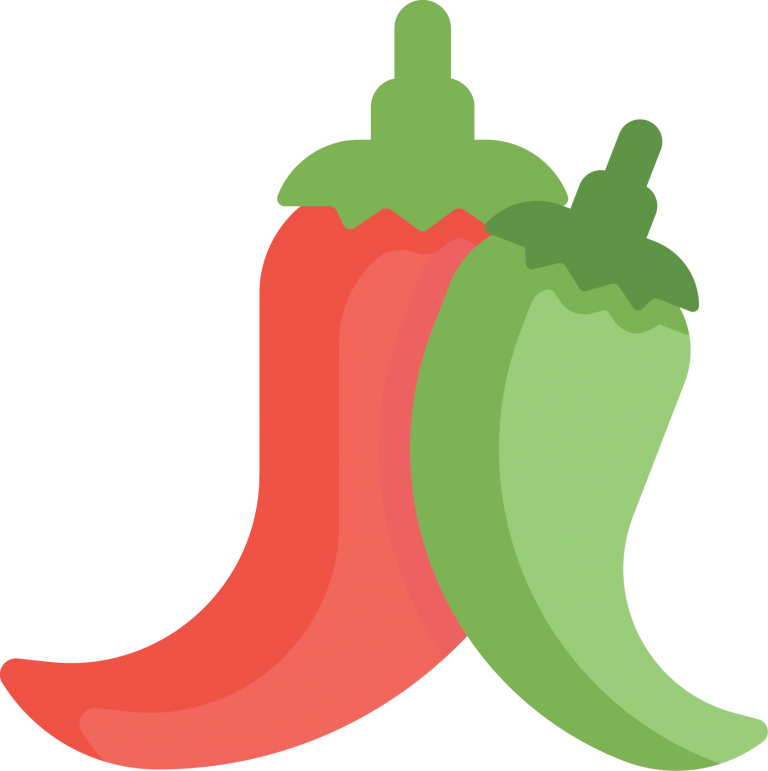
What do technical and botanical ripeness mean for hot peppers?
At technical ripeness, hot pepper fruits are still green but already have well-developed flavour and the size, shape and gloss typical of the variety. At botanical ripeness, the fruits have not only the variety's typical size and shape, but also the colouring, gloss, flavour and heat of fully ripe fruit.
Diseases and pests
Overwatering can cause the roots to rot, while a lack of moisture leads to the leaves drying out and dropping. The most dangerous pests are aphids and mites. You can get rid of them with insecticides.
